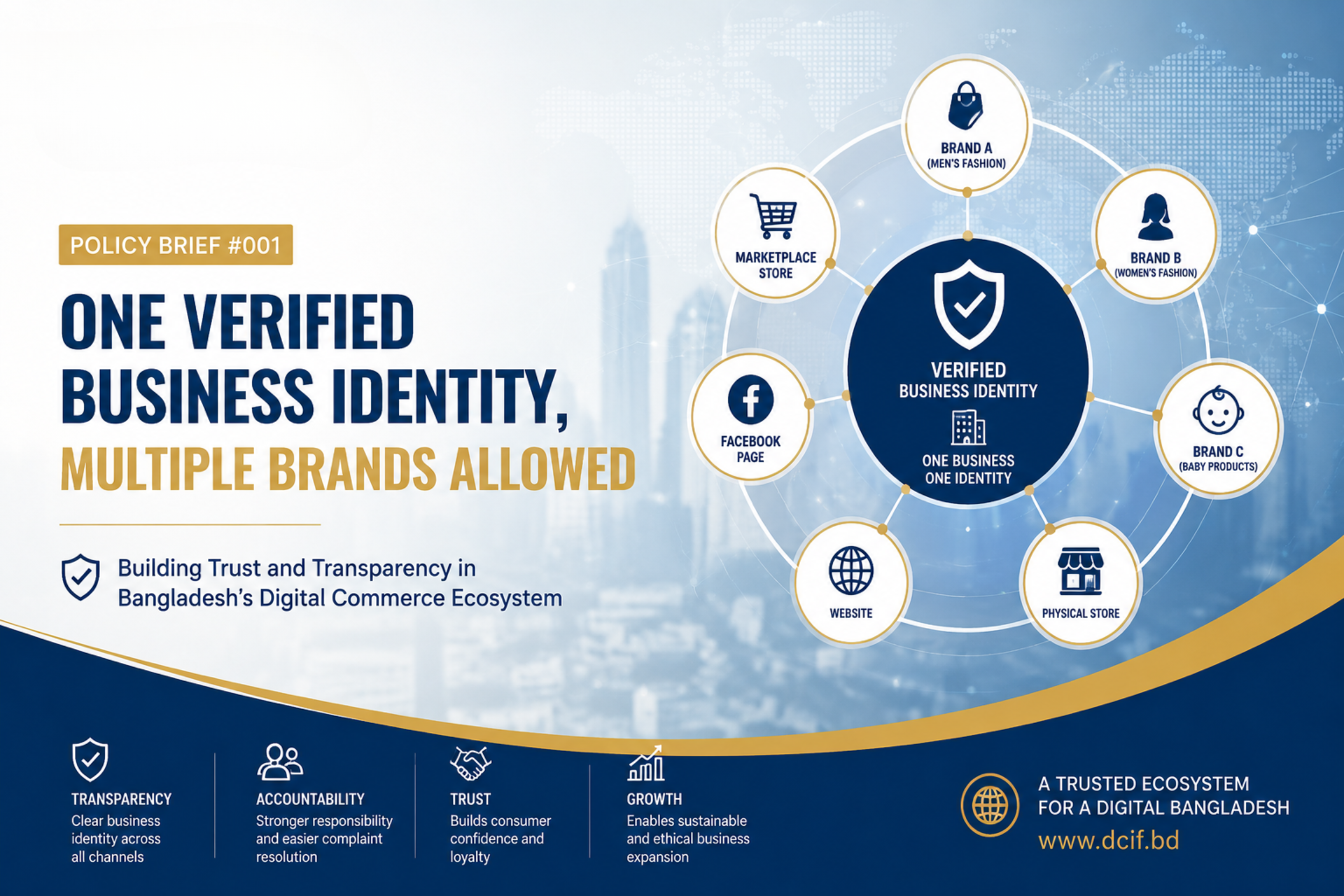
One Verified Business Identity, Multiple Brands Allowed
Building Trust and Transparency in Bangladesh’s Digital Commerce Ecosystem Status: Draft for Industry ConsultationPublished By: Digital Commerce & Innovation Federation (DCIF)Version: 1.0 A digital commerce business may operate multiple brands, pages, websites,…
Building Trust and Transparency in Bangladesh’s Digital Commerce Ecosystem
Status: Draft for Industry Consultation
Published By: Digital Commerce & Innovation Federation (DCIF)
Version: 1.0
A digital commerce business may operate multiple brands, pages, websites, or sales channels. However, all channels should be linked to one verified business identity to improve transparency, accountability, and consumer trust.
What is a Merchant Identity Framework?
A Merchant Identity Framework is a system that links multiple brands, websites, and sales channels to one verified business identity, improving transparency and trust.
Why does DCIF support One Verified Business Identity?
DCIF believes transparent business ownership strengthens consumer trust, improves accountability, and supports sustainable digital commerce growth.
Can one business operate multiple brands?
Yes. DCIF supports multiple brands and sales channels under one verified and transparent business identity.
Why This Policy Matters
As Bangladesh’s digital commerce ecosystem grows, many businesses now operate through multiple channels:
- Physical stores
- Facebook pages
- Websites
- Marketplaces
- WhatsApp commerce
- Social commerce platforms
While multi-brand operations are a normal business practice, hidden ownership structures can create confusion for consumers and make accountability difficult.
DCIF believes that transparency should increase as businesses scale.
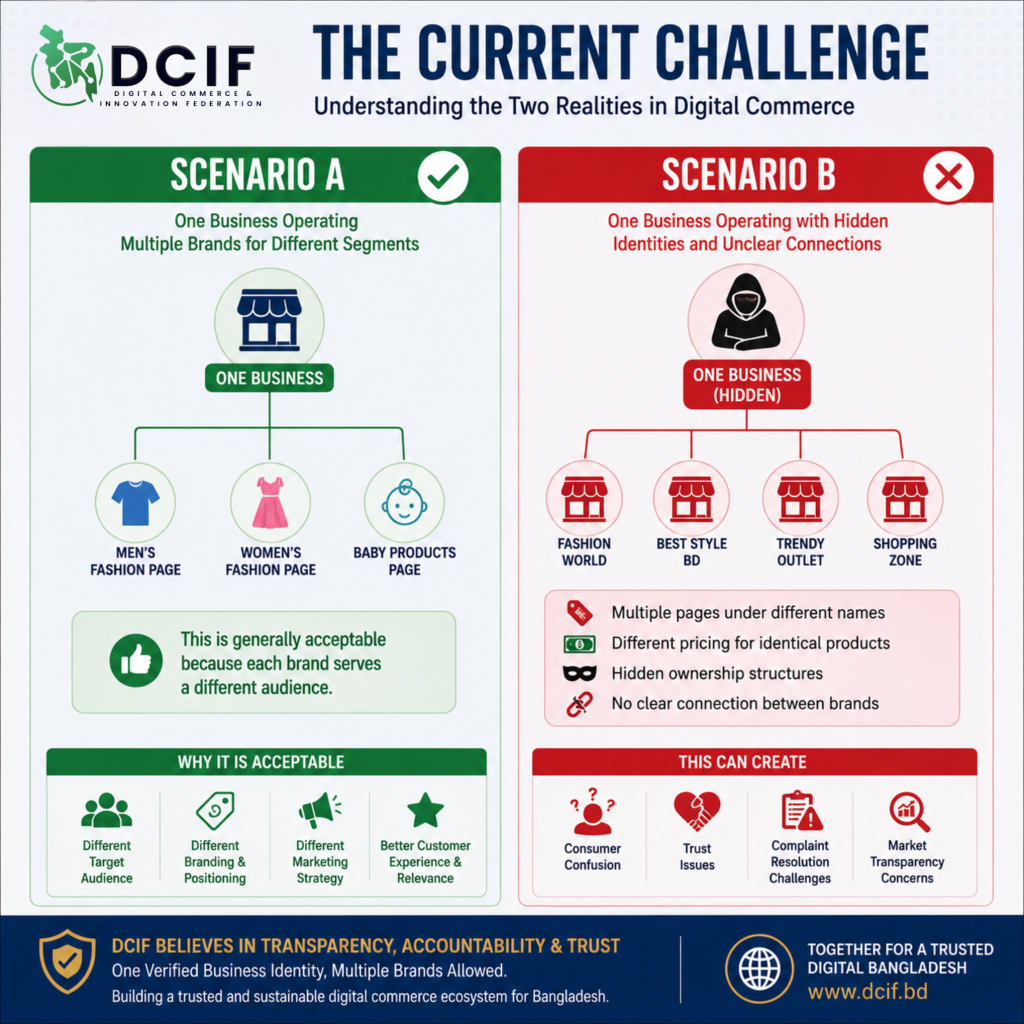
The Current Challenge
Today, it is common to see:
Scenario A
One business operating:
- Men’s Fashion Page
- Women’s Fashion Page
- Baby Products Page
This is generally acceptable because each brand serves a different audience.
Scenario B
One business operating:
- Multiple pages under different names
- Different pricing for identical products
- Hidden ownership structures
- No clear connection between brands
This can create:
- Consumer confusion
- Trust issues
- Complaint resolution challenges
- Market transparency concerns
DCIF Position
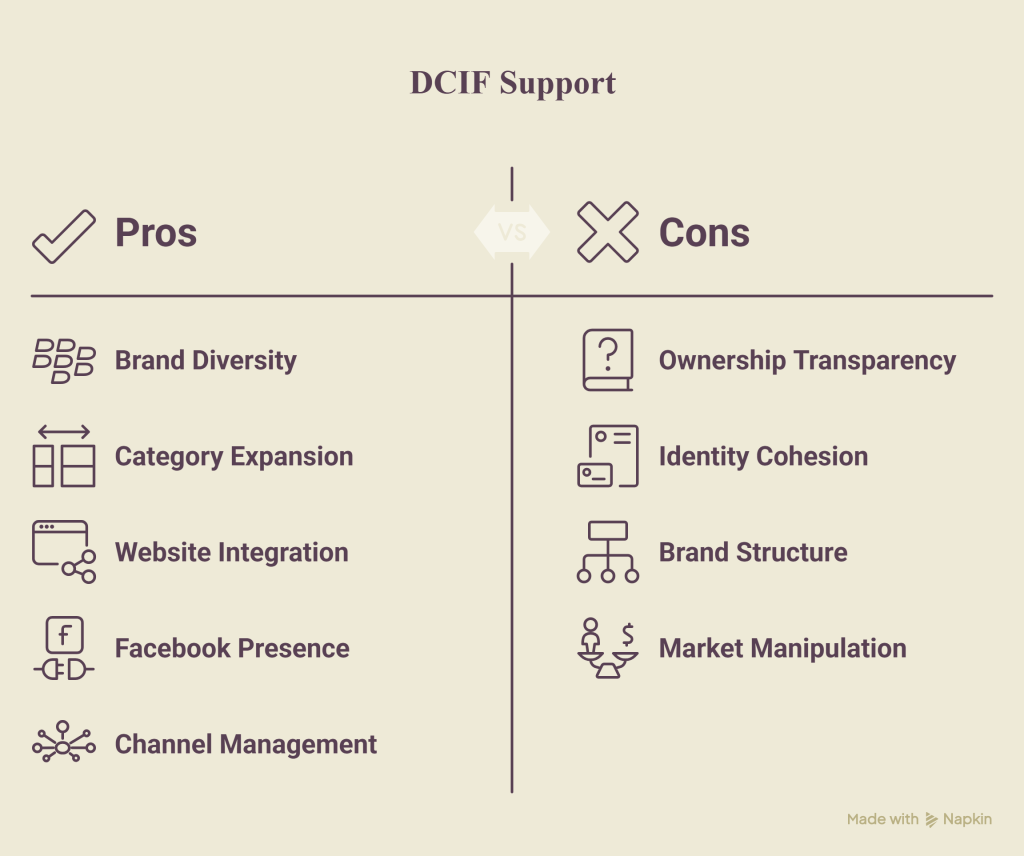
DCIF supports:
✅ Multiple Brands
✅ Multiple Categories
✅ Multiple Websites
✅ Multiple Facebook Pages
✅ Multiple Sales Channels
DCIF does not support:
❌ Hidden Business Ownership
❌ Identity Fragmentation
❌ Misleading Brand Structures
❌ Market Manipulation Through Undisclosed Duplicate Stores
Recommended Framework
One Verified Business Identity
Every business should maintain:
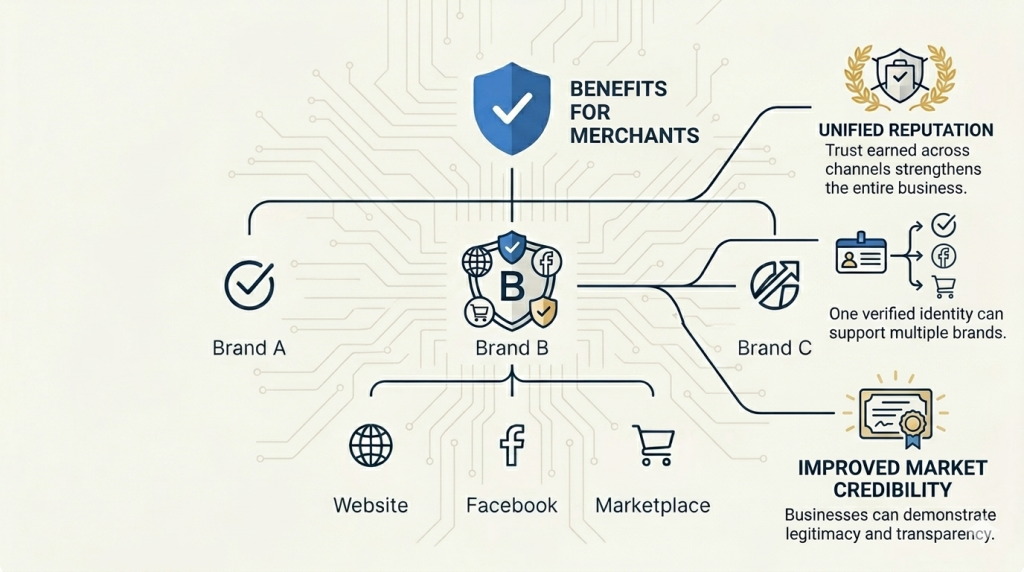
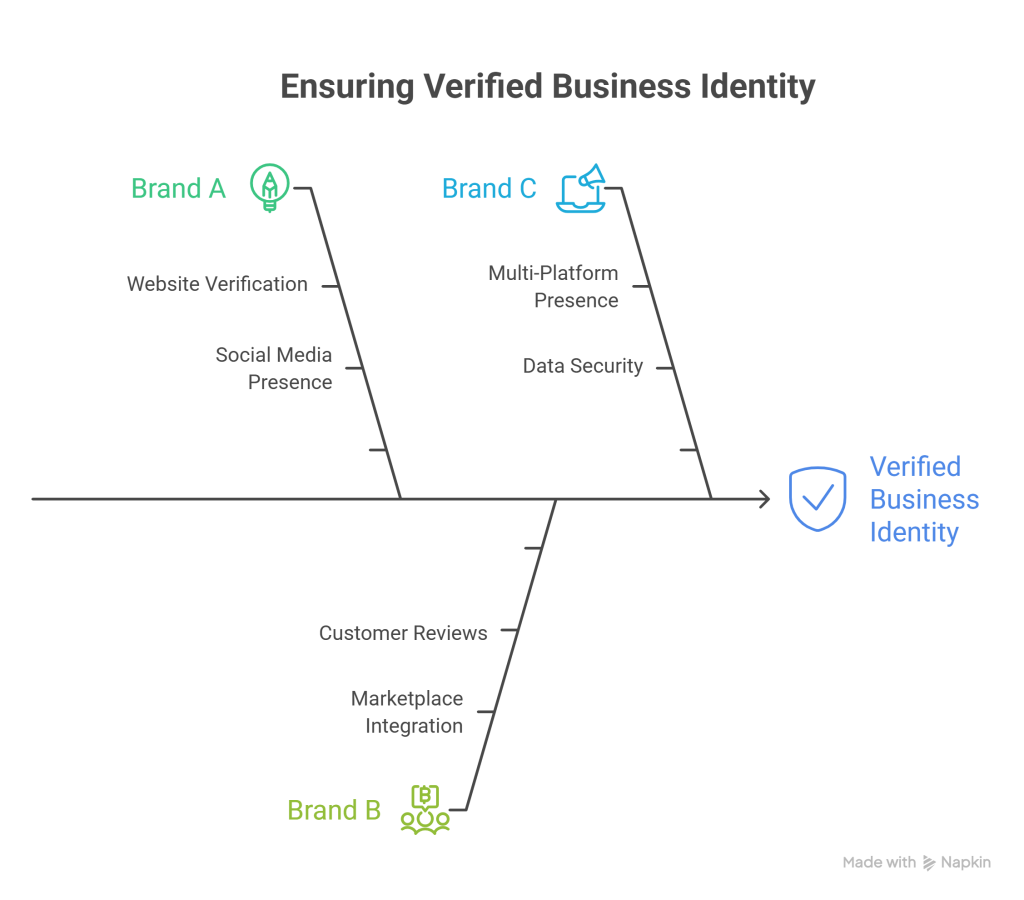
Consumers should be able to identify the verified parent business behind multiple channels.
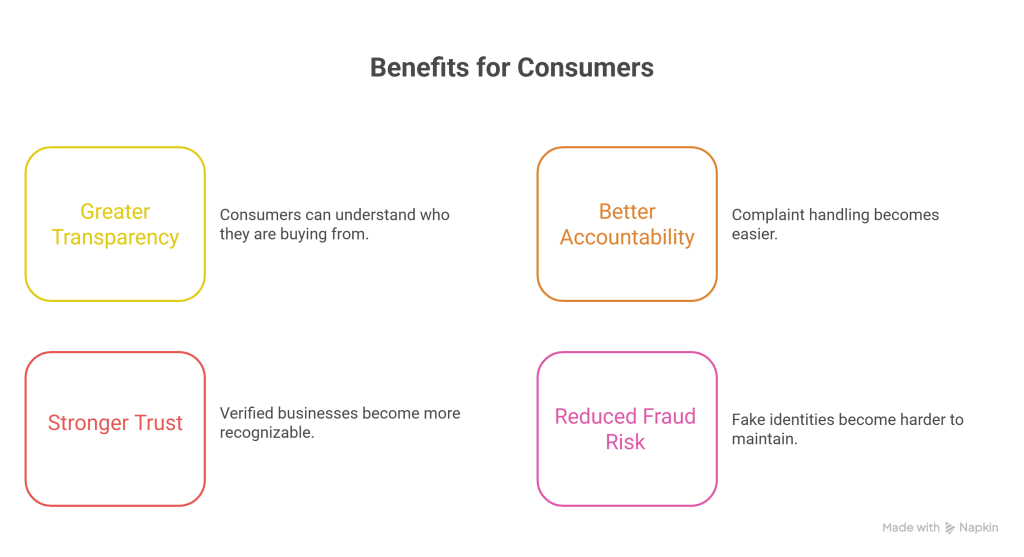
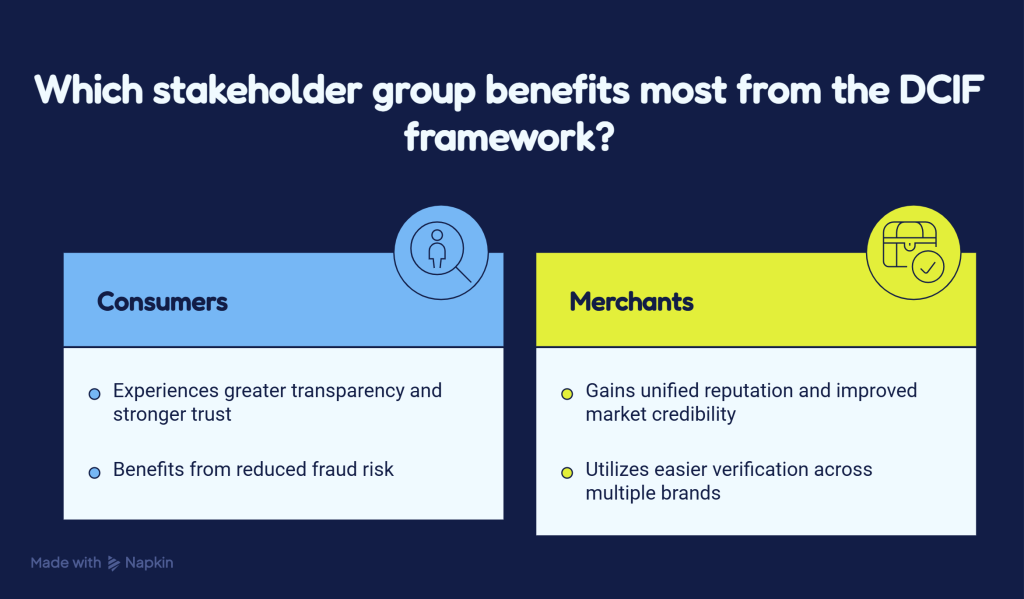
Benefits for Consumers
Greater Transparency
Consumers can understand who they are buying from.
Better Accountability
Complaint handling becomes easier.
Stronger Trust
Verified businesses become more recognizable.
Reduced Fraud Risk
Fake identities become harder to maintain.
Benefits for Merchants
Unified Reputation
Trust earned across channels strengthens the entire business.
Easier Verification
One verified identity can support multiple brands.
Improved Market Credibility
Businesses can demonstrate legitimacy and transparency.
Benefits for the Ecosystem
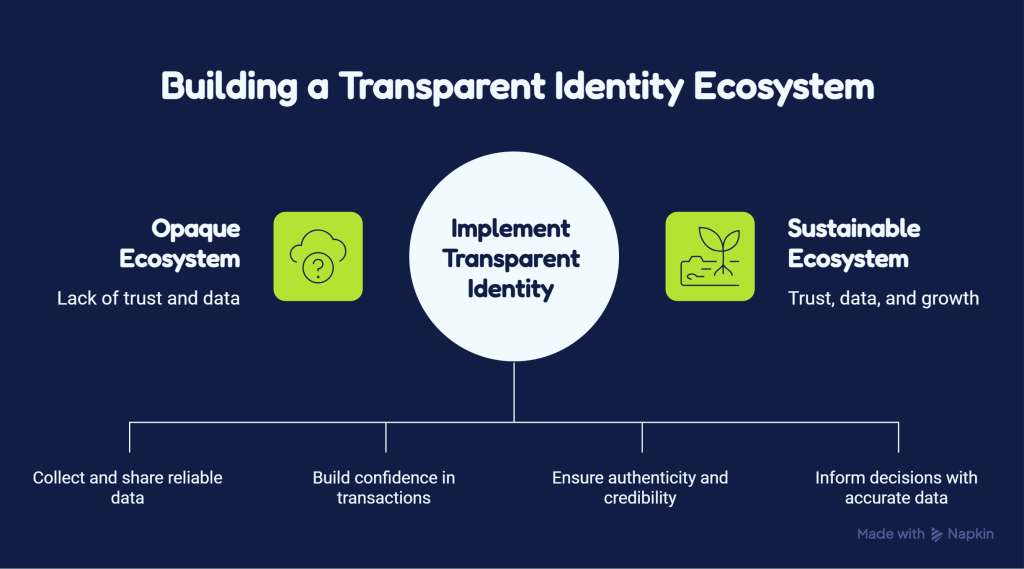
A transparent identity framework helps create:
- Better industry data
- Stronger trust indicators
- More reliable merchant verification
- Improved policy development
- Sustainable ecosystem growth
DCIF Recommendation
DCIF proposes the principle:
One Verified Business Identity, Multiple Brands Allowed
A business may operate multiple brands and sales channels, provided that the verified ownership structure remains transparent and accountable.
Alignment with EcomVision 2041
This recommendation directly supports:
Trust-Driven Ecosystem
Building confidence among businesses, consumers, and stakeholders.
Policy + Data Synergy
Creating better visibility into the digital commerce landscape.
Ethical & Sustainable Growth
Encouraging responsible business practices.
DCIF welcomes industry feedback:
- Should businesses disclose related brands?
- How can transparency be improved without limiting innovation?
- What level of disclosure is appropriate for consumers?
- How should marketplace platforms handle related merchant accounts?
Share your feedback into comment section or our social platform – Facebook Community
Conclusion
Bangladesh’s digital commerce ecosystem will continue to evolve toward multi-channel and multi-brand business models. The challenge is not the existence of multiple brands; the challenge is maintaining transparency and accountability behind them.
DCIF believes that trust grows when business identity becomes clearer, not more fragmented.
📩 Contact
📧 Email: contact@dcif.bd
Read Relevant Article From DCIF Policy Briefs
Bangladesh’s Digital Commerce Future Depends on Infrastructure, Governance & Trust
Merchant Verification & Onboarding Framework
📊 To Know The Below
Subscribe Our Newsletter Today
The Future of Bangladesh’s Digital Economy
Digital Trust Infrastructure in Bangladesh
Why Compliance Matters for SMEs


One Comment