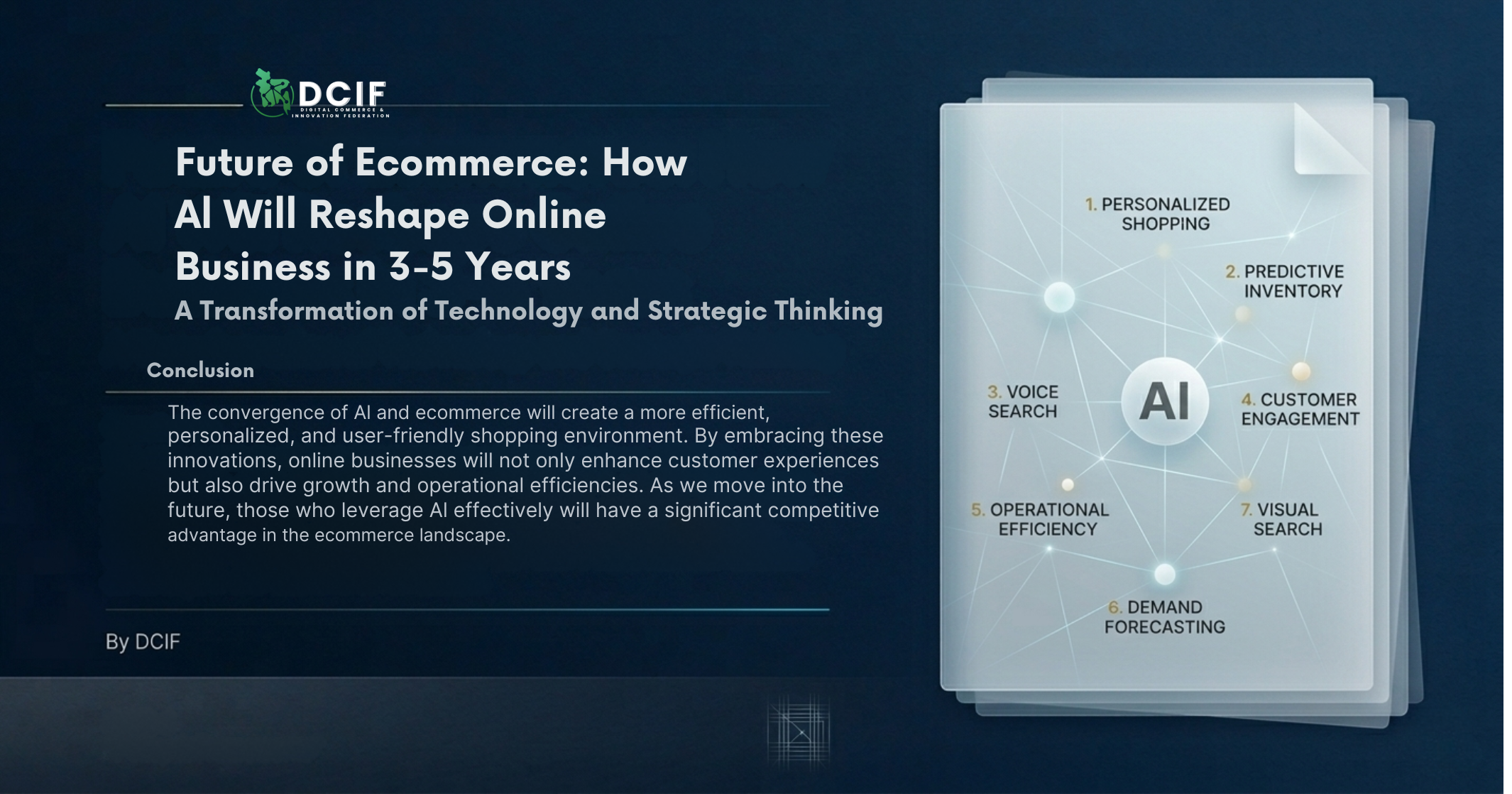
Future of Ecommerce: How AI Will Reshape Online Business in 3–5 Years
The landscape of ecommerce is evolving rapidly, driven by advancements in technology, particularly artificial intelligence (AI). As we look ahead to the next 3–5 years, several key trends and transformations are anticipated…
The landscape of ecommerce is evolving rapidly, driven by advancements in technology, particularly artificial intelligence (AI). As we look ahead to the next 3–5 years, several key trends and transformations are anticipated that will significantly reshape the way online businesses operate.
1. Enhanced Personalization
AI will enable a level of personalization that goes beyond mere recommendations. Utilizing machine learning algorithms, ecommerce platforms will analyze customer behavior and preferences in real-time, providing tailored shopping experiences. This may include personalized product suggestions, dynamic pricing, and customized marketing messages that resonate more deeply with individual consumers.
2. AI-Driven Customer Service
Chatbots and virtual assistants powered by AI will become standard features in ecommerce. These tools will provide instant support, answering customer inquiries 24/7 and managing a wide range of tasks—from tracking orders to processing returns. Enhanced natural language processing will enable these systems to understand and respond to more complex queries, improving customer satisfaction and freeing human agents to handle more intricate issues.
3. Inventory Management and Forecasting
AI will revolutionize inventory management by predicting demand with remarkable accuracy. Machine learning algorithms can analyze historical sales data, market trends, and external factors (like seasonality or economic shifts) to optimize stock levels. This proactive approach will reduce overstock and stockouts, streamlining operations and boosting profitability.
4. Visual and Voice Search Integration
As AI technology advances, visual and voice search capabilities will become integral to the ecommerce experience. Shoppers will increasingly use images to search for products or place orders through voice-activated devices. Businesses will need to adapt their SEO strategies and product listings to ensure visibility in these alternative search methods.
5. Automated Marketing Campaigns
AI will enable hyper-targeted advertising and automated campaign management. Predictive analytics will help businesses identify their most valuable customers and craft campaigns that reach them at the right time through the right channels. Automated tools will optimize ad spending, allowing businesses to adjust their strategies based on real-time performance data.
Conclusion
The convergence of AI and ecommerce will create a more efficient, personalized, and user-friendly shopping environment. By embracing these innovations, online businesses will not only enhance customer experiences but also drive growth and operational efficiencies. As we move into the future, those who leverage AI effectively will have a significant competitive advantage in the ecommerce landscape.