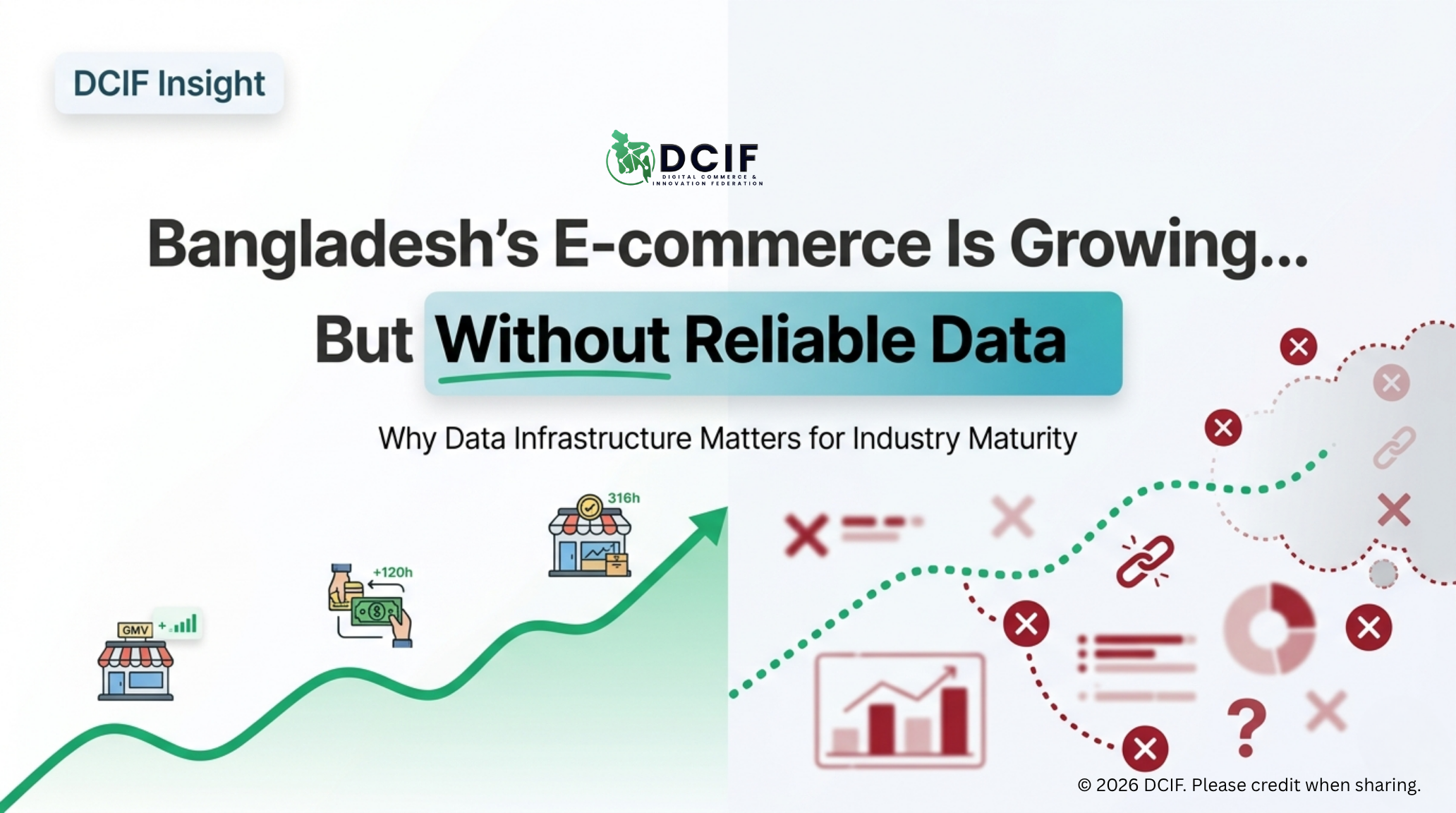
Why Bangladesh’s E-commerce Industry Cannot Mature Without Reliable Data
The Structural Risk of Building a Billion-Taka Digital Commerce Industry on Estimates Introduction Bangladesh’s e-commerce industry is often described as one of the country’s fastest-growing digital sectors. However, when investors, policymakers, researchers,…
The Structural Risk of Building a Billion-Taka Digital Commerce Industry on Estimates
Introduction
Bangladesh’s e-commerce industry is often described as one of the country’s fastest-growing digital sectors. However, when investors, policymakers, researchers, or founders attempt to evaluate the market, they encounter a serious challenge:
Most Bangladesh e-commerce market data remains estimated, approximate, or inconsistent.
Reports frequently publish conflicting figures regarding:
- Market size
- Growth rate
- Merchant volume
- Transaction frequency
- Gross Merchandise Value (GMV)
without disclosing standardized methodologies or verifiable benchmarks
This raises a strategic question:
Can Bangladesh’s e-commerce sector scale sustainably without reliable industry data?
The answer is clear: No.
Reliable data is not optional it is foundational infrastructure for building a mature, investable, and policy-ready digital commerce ecosystem.
Why Reliable Data Matters in E-commerce Industry Development
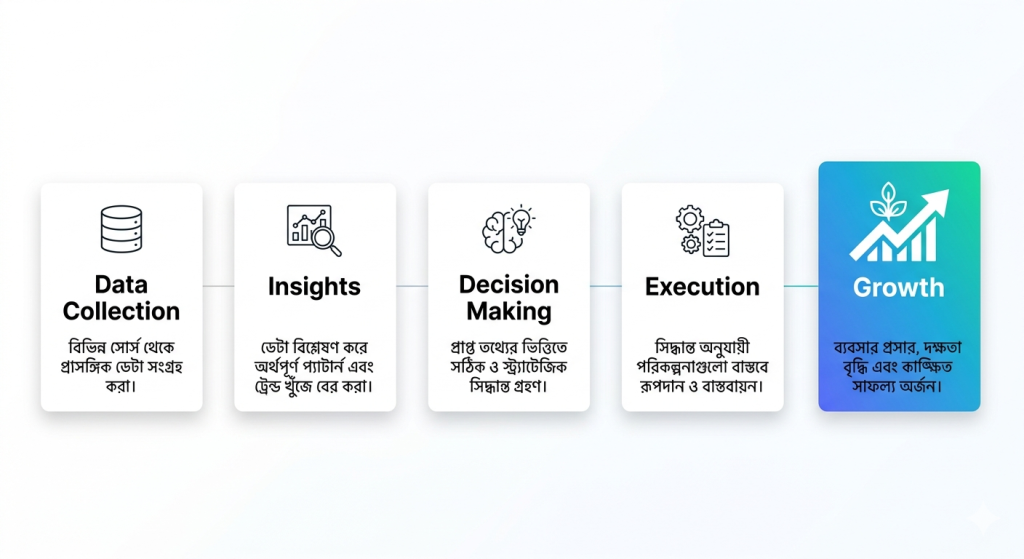
Every mature e-commerce market depends on accurate, standardized, and regularly updated industry data.
Reliable e-commerce data enables stakeholders to:
- Measure real market size
- Track industry growth accurately
- Benchmark merchant and platform performance
- Identify operational inefficiencies
- Form data-driven policy decisions
- Evaluate market attractiveness for investment
Without dependable data, an industry operates on assumptions instead of intelligence.
Structured data also becomes essential when building trust and accountability systems within the ecosystem.
[Internal Link → Trust Infrastructure / Escrow Framework]
Bangladesh’s E-commerce Data Problem
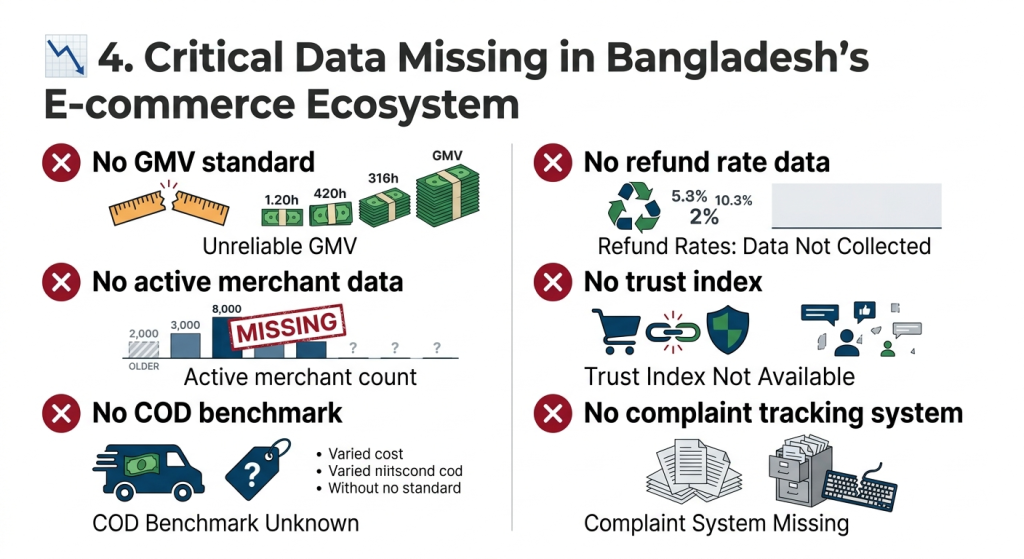
Bangladesh currently lacks a unified and transparent digital commerce data infrastructure.
Key gaps include:
- No standardized GMV reporting framework
- No verified count of active merchants
- No category-specific performance benchmarks
- No reliable refund/return statistics
- No COD success/failure benchmark
- No measurable consumer trust index
- No unified market reporting methodology
As a result:
No stakeholder can confidently define the exact current state of Bangladesh’s e-commerce market.
This weakens both ecosystem planning and institutional governance.
Digital Commerce Association Governance Framework (DCAGF)
The Risks of Operating a Data-Deficient E-commerce Industry
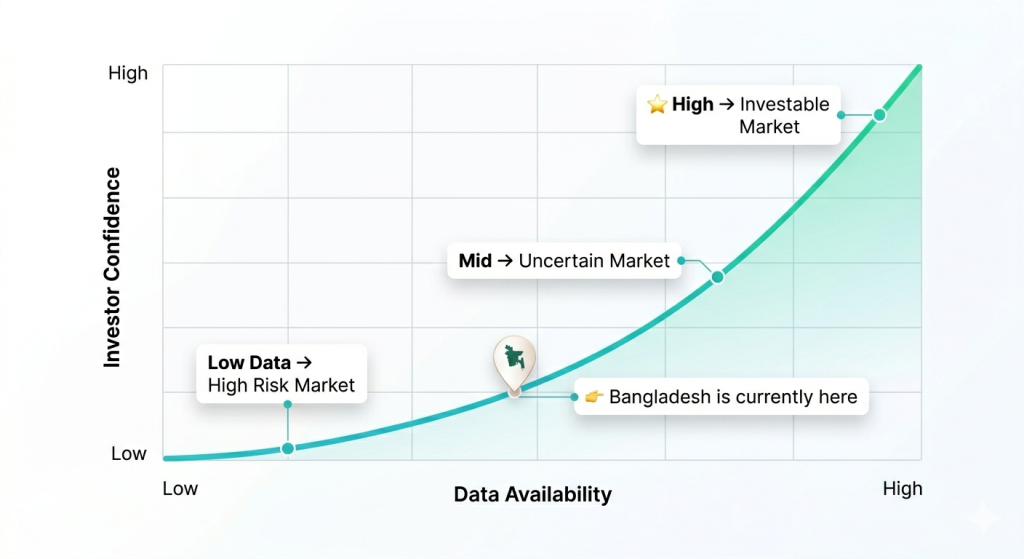
1. Reduced Investor Confidence
Institutional investors and strategic partners require verifiable market intelligence before deploying capital.
Without reliable Bangladesh e-commerce data:
- Market sizing becomes speculative
- Risk perception increases
- Valuations remain conservative
- Serious investment is delayed or redirected
Markets built on estimates appear less mature and less investable.
2. Weak Policy Formulation
Regulators cannot effectively govern what they cannot accurately measure.
Without proper e-commerce data infrastructure:
- Regulations become reactive rather than strategic
- Structural problems remain hidden
- Policy interventions lack precision
- Compliance frameworks become inefficient
Many digital commerce policy failures stem from data-deficient decision-making.
DCIF Policy Frameworks
3. Businesses Operate on Guesswork
Founders, merchants, and platforms struggle to benchmark performance due to data scarcity.
This affects decisions related to:
- Customer acquisition strategy
- Category expansion
- Regional targeting
- Pricing models
- Logistics planning
For example, one of the most poorly benchmarked metrics in Bangladesh remains COD performance.
COD in Bangladesh E-commerce Article
4. International Credibility Suffers
Foreign investors, cross-border partners, and international institutions expect:
- Verified market reports
- Transparent methodology
- Structured benchmarks
- Industry performance dashboards
When these do not exist, Bangladesh’s e-commerce market appears:
- High-risk
- Underdeveloped
- Institutionally immature
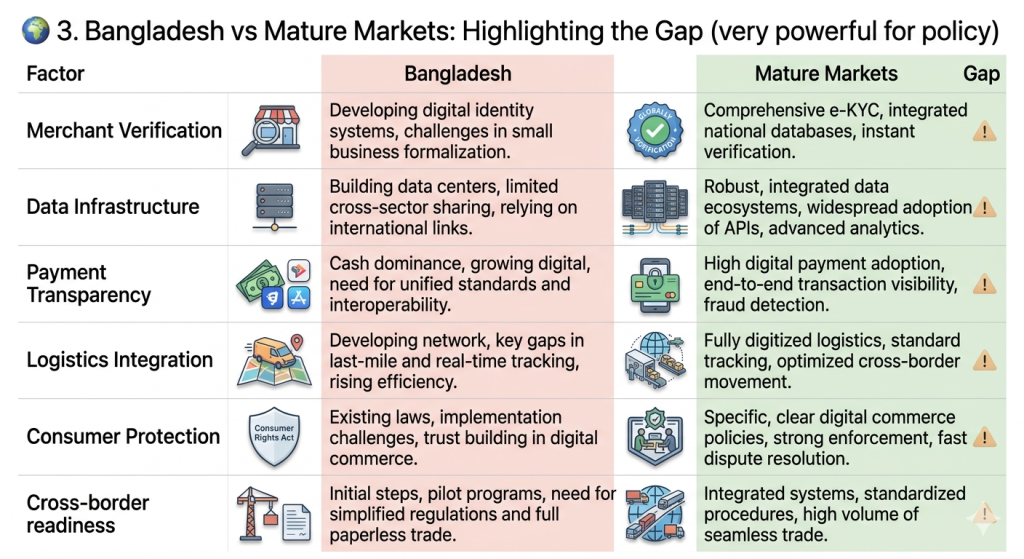
How Mature Digital Commerce Markets Handle Data Infrastructure
Leading digital commerce ecosystems invest heavily in data infrastructure and market intelligence systems.
Common practices include:
- Quarterly industry reports
- Platform benchmarking standards
- Government-backed digital dashboards
- Independent market intelligence bodies
- Standardized merchant reporting protocols
These systems increase:
- Investor trust
- Policy effectiveness
- Market efficiency
- International credibility
Mature data systems typically coexist with mature governance systems.
Governance Framework
What Bangladesh’s E-commerce Industry Needs Next
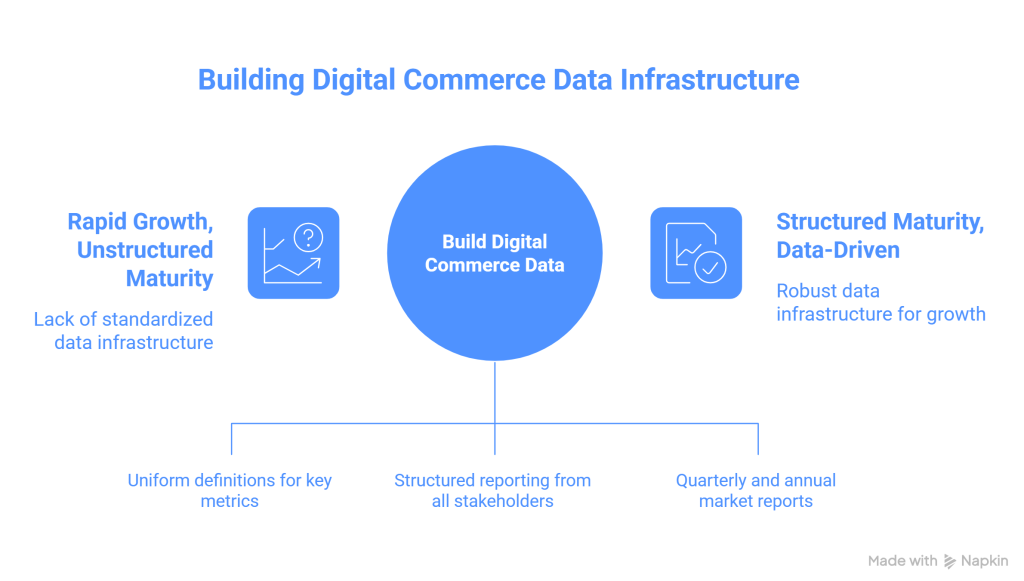
To move from rapid growth to structured maturity, Bangladesh must build digital commerce data infrastructure.
Recommended strategic priorities:
A. Standardized Industry Metrics
Bangladesh needs uniform definitions for:
- GMV
- Active merchants
- Refund rates
- COD success ratio
- Complaint metrics
- Consumer trust indicators
B. Centralized Reporting Framework
Develop structured reporting mechanisms involving:
- E-commerce platforms
- Payment gateways
- Logistics providers
- Marketplaces
- Merchant associations
C. Periodic Industry Intelligence Reporting
Quarterly and annual market intelligence reports should include:
- Market performance
- Growth trends
- Category analysis
- Risk indicators
- Operational benchmarks
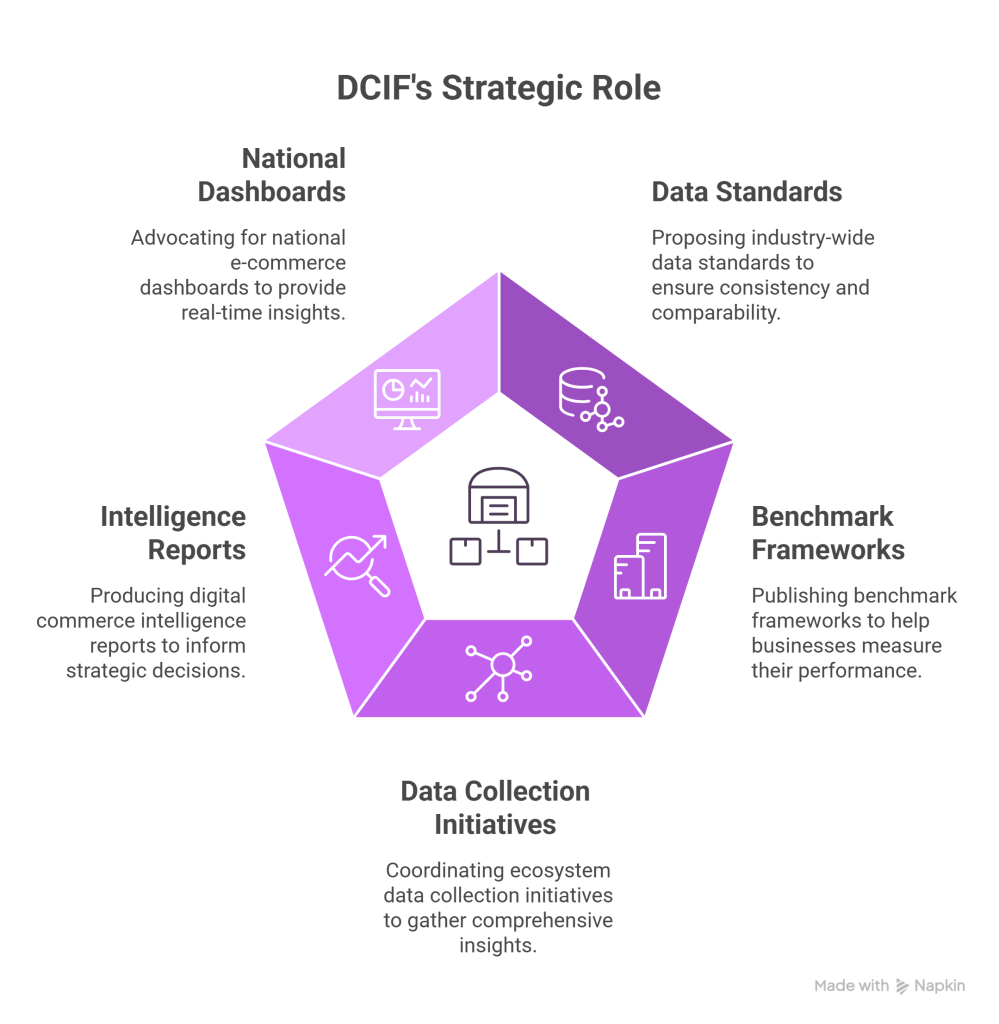
The Strategic Role DCIF Can Play
As a policy-driven ecosystem institution, DCIF can help bridge Bangladesh’s e-commerce data gap by:
- Proposing industry-wide data standards
- Publishing benchmark frameworks
- Coordinating ecosystem data collection initiatives
- Producing digital commerce intelligence reports
- Advocating for national e-commerce dashboards
These efforts support DCIF’s broader mission to build a structured, transparent, and future-ready digital commerce ecosystem.
About DCIF
Conclusion
Bangladesh’s e-commerce sector is growing rapidly
but growth without measurement is not maturity.
Without reliable data:
- Investors hesitate
- Policymakers speculate
- Businesses operate blindly
- Institutions remain weak
An e-commerce industry without reliable data does not scale strategically
it simply grows blindly.
The next stage of Bangladesh’s digital commerce evolution will not be defined only by more merchants or more sales
It will be defined by whether the ecosystem develops the infrastructure to understand, measure, and govern itself.
Recommended Next Reading
- Digital Commerce Association Governance Framework (DCAGF)
- Why COD Is a Structural Problem in Bangladesh E-commerce
- Escrow Infrastructure for Bangladesh’s Digital Commerce Future
- DCIF Policy & Framework Library